
Toyota RAV4 vs Ford Kuga in Europe: The Cost of Opportunity Most Buyers Ignore
When comparing cars for personal use, most buyers focus on standard metrics: fuel consumption, reliability, comfort, and resale value.
However, very few consider a much more impactful financial metric:
The opportunity cost of the capital tied up in the purchase price.
The Simple Example
Let’s look at a straightforward comparison between two popular SUVs in the European market:
- Toyota RAV4: €47,000
- Ford Kuga: €27,000
This leaves a substantial upfront price gap of €20,000.
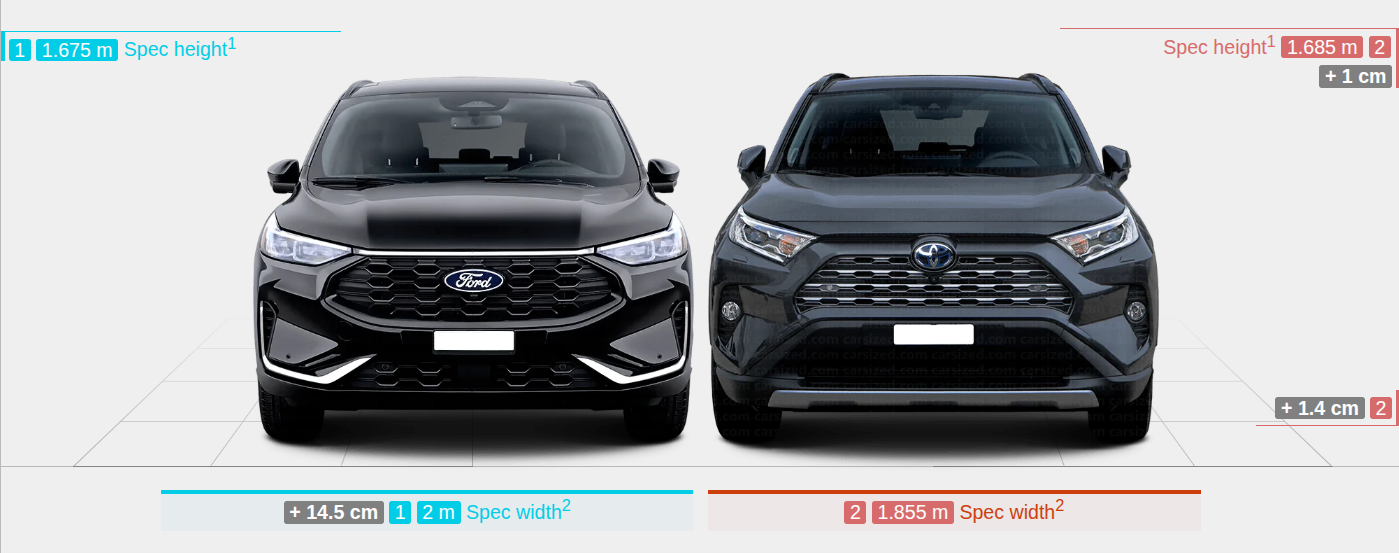
If we assume the buyer chooses the more affordable Ford Kuga and invests the €20,000 difference into an S&P 500 index fund—assuming a historical average return of roughly 10% per year—that investment would grow to approximately €29,282 after four years.
Depreciation & The Four-Year Horizon
For the sake of simplicity, let’s assume both vehicles depreciate at the exact same rate, retaining 60% of their initial purchase price after four years.
- Toyota RAV4 Resale Value: €28,200
- Ford Kuga Resale Value: €16,200
Total Outcome Comparison
If we measure the total net wealth of both scenarios at the end of year four, the difference is striking.
Option 1 — Toyota RAV4
- Resale Value: €28,200
- Total Net Value: €28,200
Option 2 — Ford Kuga + Invested Difference
- Resale Value: €16,200
- Investment Account: €29,282
- Total Net Value: €45,482
The Bottom Line: The Kuga and investment strategy puts you ahead by €17,282.
The Counterintuitive Insight
To put this math into perspective: merely to break even with the RAV4 scenario, the Ford Kuga’s residual value after four years could theoretically drop to -€1,000 (meaning you would essentially have to pay someone to take it off your hands), and the financial outcome would still be equivalent.
This highlights just how heavily the compounding effect of invested capital dominates vehicle depreciation over time.
Important Caveats
It is important to note that this is a pure capital allocation model, not a total cost-of-ownership (TCO) analysis. It purposefully excludes:
- Real-world fuel consumption variations
- Maintenance, repair costs, and potential downtime
- Fluctuations in the specific second-hand market for each brand
- Taxes, insurance premiums, and the effects of financing
The Key Takeaway
In personal finance, the most vital comparison is rarely between two vehicles. Instead, it is the choice between:
Sinking funds into a depreciating asset vs. Allocating capital to a compounding investment.
The Toyota RAV4 remains an excellent vehicle with undeniable reliability and resale strength. However, from a strict wealth-building perspective, the opportunity cost of tying up capital in a premium vehicle can drastically alter your long-term financial trajectory.
Author’s Note:
If Toyota successfully expands its production capacity and builds more local factories in Europe, it could significantly reduce logistics costs and improve their pricing competitiveness across the European market, potentially shifting this math in the future.
